

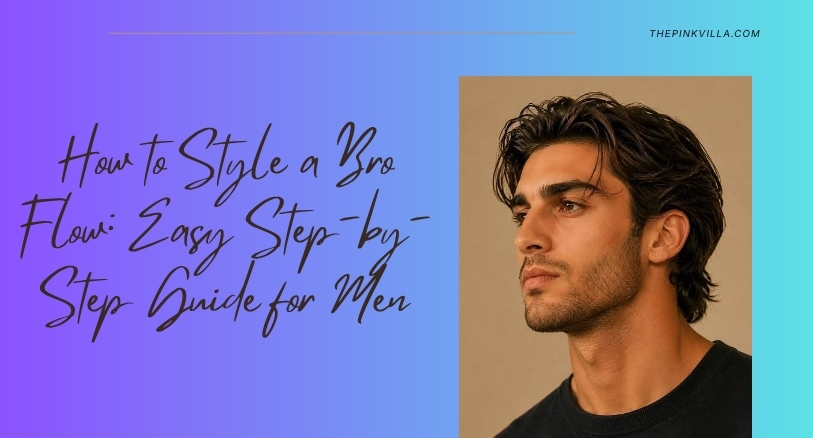

Learning How to Style a Bro Flow is less about creating a perfect shape and more about helping your hair move naturally. The hairstyle works because of its relaxed appearance, so you do not need to spend a long time forcing every strand into place.
The right approach starts with understanding your own hair. Straight hair may need more direction, while wavy hair can often create movement with very little effort. Once you know how your hair behaves, styling becomes much easier.
If you are still growing your hair, do not worry if it does not immediately look like the finished style. Length, texture, and natural growth direction all affect the final result. For the bigger picture, Bro Flow Hairstyle explains how the style develops and what to expect while growing it.
Start With the Right Hair Length
Before styling, your hair needs enough length to create the characteristic flow. Very short hair will not have enough weight to move naturally backward or toward the sides.
The front is particularly important because it needs enough length to move away from your forehead. The sides and back should also have enough growth to create a connected appearance.
If your hair is still in the growing stage, focus on patience rather than trying to force the final shape too early. Styling products can provide temporary control, but they cannot replace the length needed for natural movement.
Wash and Prepare Your Hair
Clean hair gives you a better starting point. However, washing your hair does not mean you need to use a complicated routine.
Choose products that suit your hair type and avoid using more product than necessary. After washing, gently remove excess water with a towel instead of aggressively rubbing the hair.
Your hair should be slightly damp before styling. It should not be soaking wet, but it also does not need to be completely dry.
This gives you enough flexibility to guide the hair into the direction you want.
How to Style a Bro Flow Step by Step
Once your hair is clean and slightly damp, you can begin shaping it.
- Remove excess moisture. Gently towel-dry your hair until it is damp rather than wet.
- Create your natural direction. Use your fingers or a brush to move the hair away from your face.
- Guide the front backward. Work from the forehead toward the sides and back without forcing the hair into a rigid position.
- Shape the sides. Let the sides follow the natural direction of the top instead of pushing them outward.
- Use a blow dryer if needed. A low or medium heat setting can help direct stubborn sections.
- Add a small amount of product. Use lightweight styling product only when your hair needs additional control.
- Finish naturally. Once the hair is in position, leave it alone and allow the natural texture to show.
The important part is not to overwork the hair. A bro flow should still have movement when you are finished.
Using a Blow Dryer
A blow dryer can make a noticeable difference when your hair naturally falls forward. It gives you more control over the direction without requiring a large amount of styling product.
Start with slightly damp hair. Use your fingers or a brush to guide the hair backward while directing the airflow in the same direction.
Keep the dryer moving rather than concentrating hot air on one section for too long. Excessive heat can make hair feel dry and difficult to manage.
Once the hair is mostly dry, you can reduce the heat or finish with a cooler setting. This helps the hair settle while keeping the overall finish natural.
You do not need to create a perfectly smooth result. A little texture is part of the appeal.
Choosing a Styling Product
The right product depends on your hair type and the finish you want. A bro flow generally benefits from products that provide control without making the hair stiff.
Common options include:
- Light styling cream: Useful when you want flexible control and a natural finish.
- Light pomade: Can provide more direction while maintaining some movement.
- Matte clay: Useful for thicker hair that needs additional control, although too much can weigh longer hair down.
- Leave-in conditioner: Helpful when the main goal is softness, moisture, and easier management rather than strong hold.
Start with a small amount. Rub the product between your hands before applying it, then work it through the hair gradually.
Adding more is easy. Removing too much product is not.
How to Style Straight Hair
Straight hair can create a smooth version of the look, but it may also fall forward easily.
If your hair refuses to stay away from your face, use a blow dryer while guiding it backward. This can help train the hair into a more suitable direction.
Avoid applying too much heavy product. Fine or straight hair can quickly look flat when overloaded.
A lightweight cream or a small amount of flexible-hold product may be enough. The goal is to maintain movement rather than create a rigid finish.
How to Style Wavy Hair
Wavy hair can make the styling process easier because the natural texture already provides movement.
Instead of brushing the waves out completely, guide them into position using your fingers. This helps preserve the texture while keeping the overall shape controlled.
A lightweight cream or leave-in product can help reduce unwanted frizz without removing the natural waves.
Letting the hair dry naturally can also work well if your waves already fall in the right direction.
How to Style Thick Hair
Thick hair can create an impressive amount of volume, but it may require more control.
The key is to avoid making the hair look excessively bulky. When drying, guide the hair backward and toward the sides while keeping the shape balanced.
A small amount of stronger styling product may help if your hair refuses to stay in place. However, use it gradually.
If your hair consistently becomes too heavy around the sides, the issue may be the haircut rather than the styling routine. In that situation, maintaining the right shape can make everyday styling much easier.
How to Keep the Bro Flow Natural
The easiest way to make this hairstyle look natural is to avoid over-styling it.
You do not need to remove every strand of texture. You also do not need to create an extremely sharp part.
After guiding the hair into place, give it some time to settle. If one small section moves slightly during the day, that does not necessarily mean the hairstyle has failed.
That natural movement is part of the look.
A good bro flow should appear relaxed rather than frozen in position.
Common Styling Mistakes
Using too much product is one of the easiest mistakes to make. Longer hair can quickly become heavy when covered with excessive styling product.
Another problem is brushing the hair too aggressively. If your natural texture is wavy or curly, excessive brushing can remove some of the movement that makes your hair look interesting.
Applying heat without care can also make styling more difficult over time. Keep the dryer at a sensible temperature and avoid concentrating heat on one area for too long.
Finally, do not expect the hairstyle to look perfect immediately after you start growing your hair. Styling can improve direction, but it cannot replace the length needed to create the finished shape.
How to Make a Bro Flow Last Throughout the Day
The goal is to start with the right foundation. Hair that is prepared properly will usually require less product later.
Once the hair is positioned, avoid repeatedly touching it. Constantly running your hands through your hair can disturb the shape and transfer oil from your hands.
If a section moves during the day, use your fingers to guide it back instead of applying more product every time.
Your hair may also respond differently depending on the weather. Humidity can increase frizz, while dry conditions may make the hair feel less flexible. Adjusting the amount of product slightly can help without changing the entire routine.
How Often Should You Style It?
You do not necessarily need a complicated styling routine every morning.
Some days, your hair may already fall into place after washing and drying. On other days, you may need a blow dryer and a small amount of product.
The important thing is consistency rather than complexity. Once you understand how your hair behaves, you will know when it needs extra attention and when you can leave it mostly alone.
That is one of the advantages of the style. It does not need to look exactly the same every day.
Final Thoughts
Learning How to Style a Bro Flow is mainly about understanding direction, texture, and balance. Start with clean, slightly damp hair, guide it away from the face, and use heat or styling product only when necessary.
Do not try to make every strand perfectly rigid. The relaxed movement is what gives the hairstyle its identity.
As your hair grows, your routine may change. You may eventually find that your hair needs less product and less effort because the additional length naturally helps it fall into place.
The best styling routine is the one that works with your hair rather than against it.
FAQs
How do you style a bro flow?
Start with clean, slightly damp hair and guide it away from your face. Use a blow dryer if needed, then apply a small amount of lightweight styling product for additional control.
What product is best for a bro flow?
A lightweight styling cream, flexible pomade, or suitable leave-in product can work well. The best choice depends on your hair texture and the amount of control you need.
Should you blow dry a bro flow?
You do not have to, but a blow dryer can help direct hair that naturally falls forward. Use moderate heat and guide the hair in the desired direction.
Can you style a bro flow without products?
Yes. If your hair naturally flows backward or toward the sides, you may only need water, your fingers, or a brush.
How do you keep a bro flow from falling forward?
Guide the hair backward while it is damp and use a blow dryer to reinforce the direction. A small amount of flexible-hold product can provide additional control when needed.
Leave a Reply